June 14th is World Blood Donor Day! Today we’re sharing the difference between blood donation and plasma donation and how you can make a difference for people living with Primary Immunodeficiency.
What is the difference between blood donation and plasma donation?
During blood donation your whole blood (containing red blood cells, white blood cells, platelets, and plasma) is collected through a needle in your arm. The full blood donation process typically takes 45-60 minutes, with the blood draw lasting about 10 minutes.
During plasma donation your plasma is separated and collected while the rest of your blood (red blood cells and platelets) is returned to your body through a process called plasmapheresis. To donate plasma, a needle is inserted into your arm and connected to a machine for the separation and return process. For first time donors, the process can take up to two hours. For repeat donors, the process typically takes 60-90 minutes.
Are blood donations and plasma donations used for the same things?
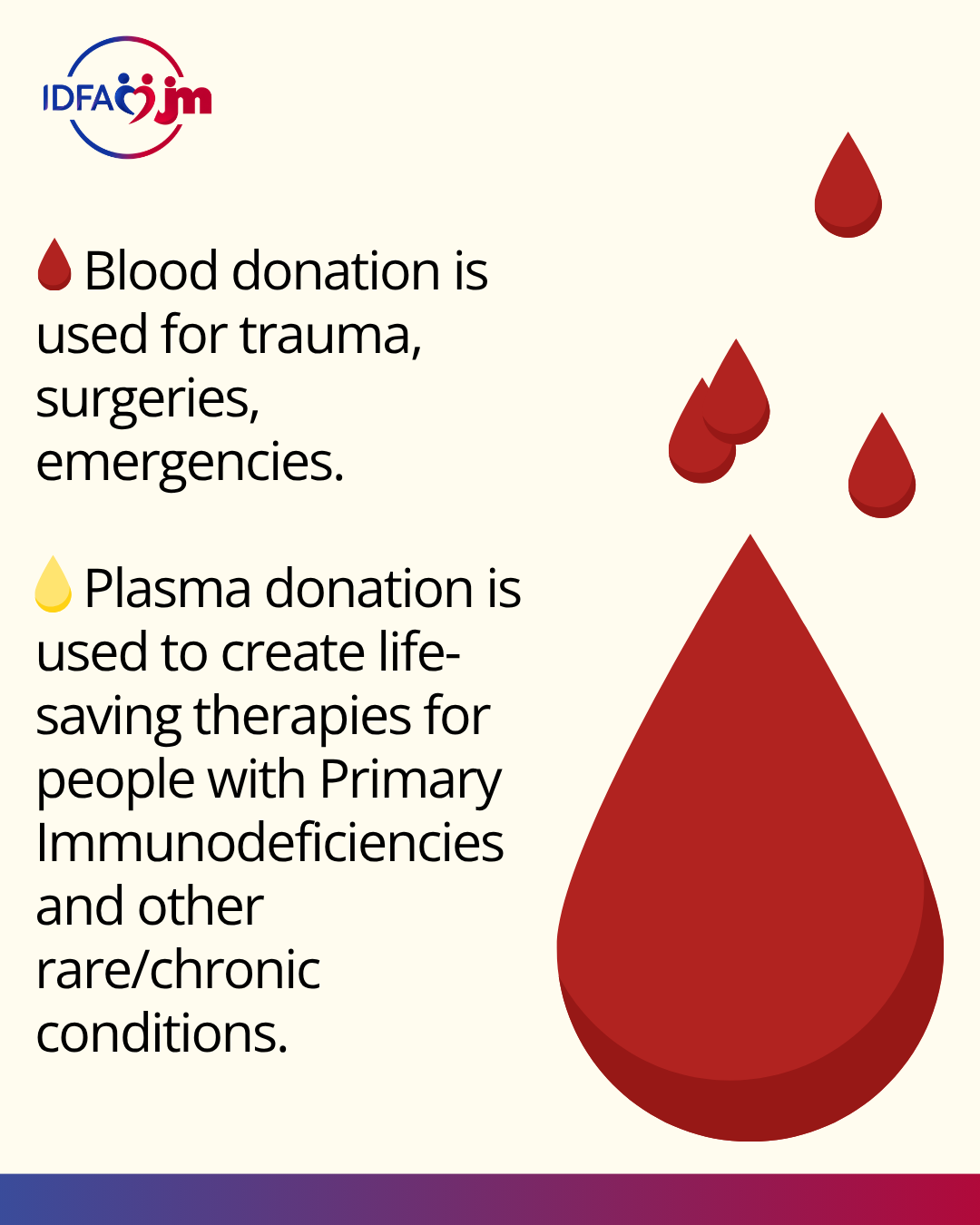
Both blood donations and plasma donations save lives in a variety of ways.
Blood donations are used in transfusions to replace blood lost in surgery or through injury. Transfusions also help people with blood disorders such as sickle cell disease or chronic anemia.
Plasma donations are given to trauma, burn, or shock patients. Donated plasma is also used to create plasma protein therapies that treat a variety of chronic, rare diseases like Primary Immunodeficiency.
How does plasma help people with Primary Immunodeficiency?
Primary Immunodeficiency is a group of more than 550 genetic disorders of the immune system that are chronic, serious, and sometimes life-threatening. Plasma is essential for creating Immunoglobulin (Ig) Replacement Therapy, a standard treatment for people with Primary Immunodeficiency for over 40 years. For many people with Primary Immunodeficiency, plasma derived treatments allow them to live and thrive.
Plasma can’t be made in a lab, so every donation is crucial. On average it takes 130 plasma donations each year to support one person’s Primary Immunodeficiency treatment.
How can I donate plasma?
Generally, you are eligible to donate plasma if you are 18 years or older, weigh at least 110 pounds, and in overall good health. First-time plasma donors will complete a quick screening, which typically includes checking your vitals, measuring your iron, and answering medical history questions. Please check with your local plasma donation center for any additional requirements.