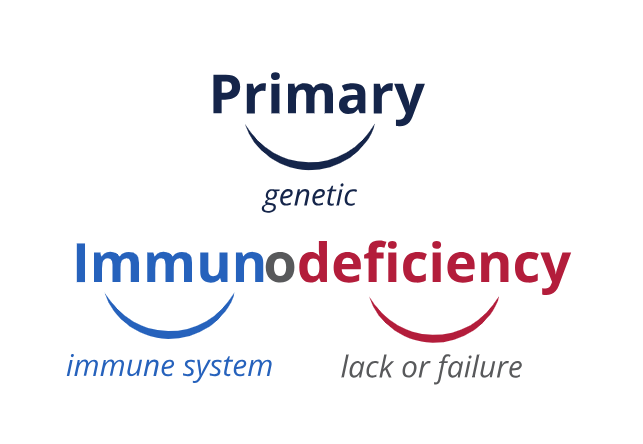
Primary Immunodeficiency is a group of over 550 genetic disorders that cause one or more parts of the immune system to not work properly. People with Primary Immunodeficiency are more likely to get frequent and severe infections.
How many people have Primary Immunodeficiency?
The exact number is unknown, but it is estimated that there are up to 83 million people living with Primary Immunodeficiency worldwide. 70-90% of people with Primary Immunodeficiency remain undiagnosed, with a median time of 4-9.5 years from symptom onset to correct diagnosis.
What are the symptoms of Primary Immunodeficiency?
The signs of Primary Immunodeficiency can be different for children and adults.
For children, the 10 Warning Signs of Primary Immunodeficiency are:
- Four or more new ear infections within one year
- Two or more serious sinus infections within one year
- Two or more months on antibiotics with little effect
- Two or more pneumonias within one year
- Failure of an infant to gain weight or grow normally
- Recurrent, deep skin or organ abscesses
- Persistent thrush in mouth or fungal infection on skin
- Need for intravenous antibiotics to clear infections
- Two or more deep-seated infections including septicemia
- A family history of Primary Immunodeficiency
For adults, the 10 Warning Signs of Primary Immunodeficiency are:
- Two or more new ear infections within one year
- Two or more new sinus infections within one year (in the absence of allergy)
- One pneumonia per year for more than one year
- Chronic diarrhea with weight loss
- Recurrent viral infections (cold, herpes, warts, condyloma)
- Recurrent need for intravenous antibiotics to clear infections
- Recurrent, deep abscesses of the skin or internal organs
- Persistent thrush or fungal infection on skin or elsewhere
- Infection with normally harmless tuberculosis-like bacteria
- A family history of Primary Immunodeficiency
If you or someone you know experience two or more of the warning signs speak with an immunologist about the possibility of an undiagnosed Primary Immunodeficiency. Find an immunologist near you with our Find An Expert Immunologist tool.
How is Primary Immunodeficiency diagnosed?
Diagnosing Primary Immunodeficiency is different depending on the specific genetic disorder. Generally, the diagnostic process for Primary Immunodeficiency can include newborn screening, laboratory tests, and genetic sequencing. In all cases, a patient’s medical history and symptoms will be assessed to help determine what type of testing may be necessary to confirm a diagnosis.
Learn more about the diagnostic process for Primary Immunodeficiency in the 4 Stage of Testing.
Is there a cure for Primary Immunodeficiency?
There is no singular cure for Primary Immunodeficiency, but treatments focus on preventing infections and addressing the underlying genetic disorder. Potential treatments for Primary Immunodeficiency include:
- Antibiotics – Antibiotics treat infections caused by bacteria. People with Primary Immunodeficiency may be prescribed longer or stronger courses of antibiotics than usual, including long-term (prophylactic) antibiotics which are used to reduce the number and severity of infections.
- Immunoglobulin therapy – Immunoglobulin replacement therapy, which is derived from donated plasma, provides people with Primary Immunodeficiency with the working antibodies that they need to fight off infections. People receiving immunoglobulin replacement therapy need repeat doses on a regular basis to maintain antibody levels high enough to prevent infections.
- Stem cell transplant – For some genetic disorders, stem cell transplantation can be a cure for Primary Immunodeficiency. However, stem cell transplantation is not available for every Primary Immunodeficiency disorder and people who receive stem cell transplants may experience additional symptoms or need further treatment in the future.
- Gene therapy – Gene therapy is an emerging treatment option for Primary Immunodeficiency with research and clinical trials underway. To learn more about gene therapy for Primary Immunodeficiency, watch our JMF Speaker Series with Dr. Donald B. Kohn.